ORIGINS
From bamboo to biscuit tins
Wesleyan University's instrument museum says pan replaced tamboo bamboo bands outlawed under British colonial law, starting with biscuit drums and metal tins before oil drums.
Follow the making doodledrums
THE STEEL PAN STORY
Hit an oil drum and it clangs. Shape it, and it plays a tune.
Follow the making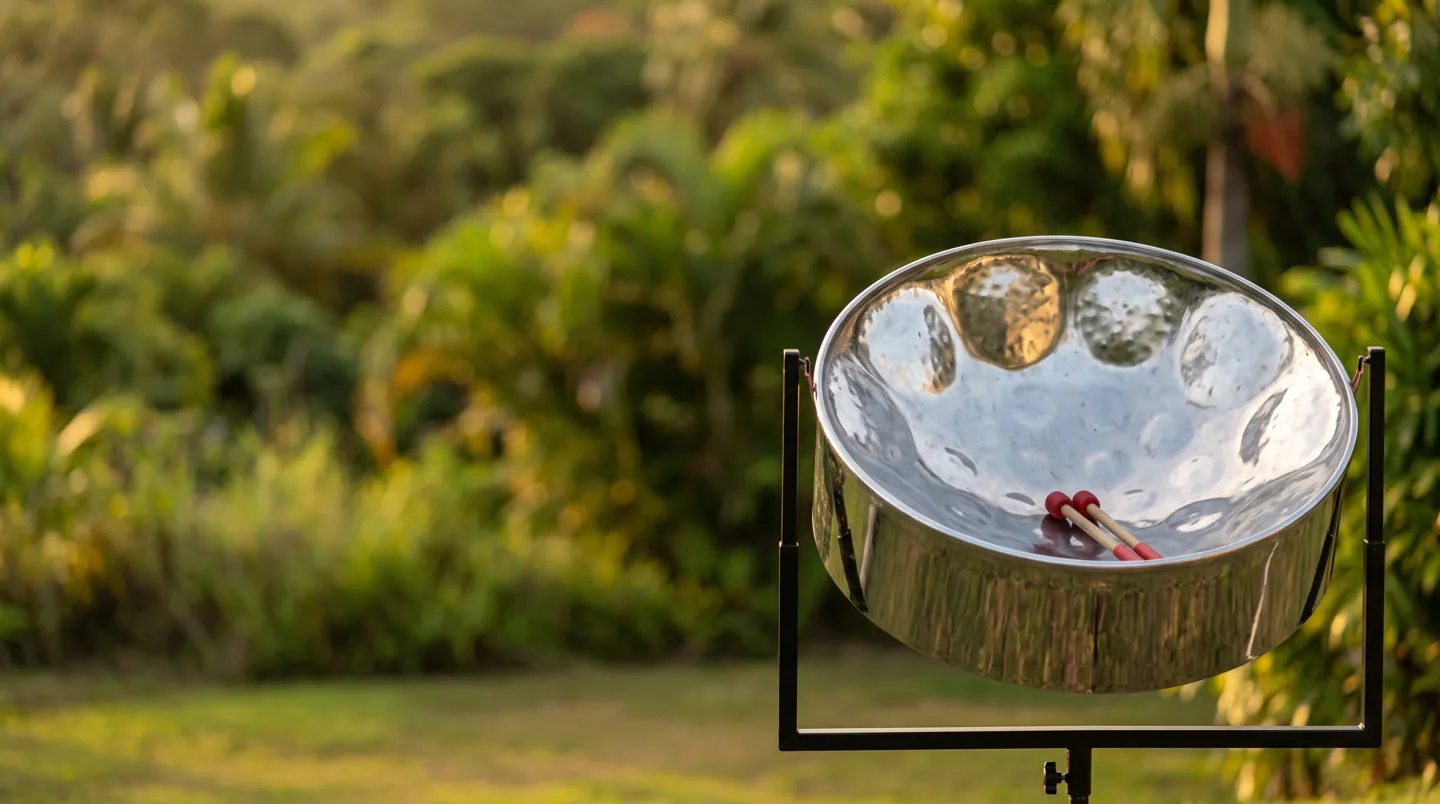
55 GALLONSof tuned steel
The steel pan is the national instrument of Trinidad and Tobago. It grew out of carnival bands in the late 1930s, and by the 1950s it was a fully chromatic instrument playing calypso, jazz and orchestral music.
At a glance
55 gallons
Size of the oil drums the first pans were made from
Physicist Thomas Rossing and colleagues write that the original pans came from empty 55-gallon oil drums, thousands of which were left on Trinidad's beaches after World War II.
THE DRUM · ACOUSTICS RESEARCH
2½ octaves
Range each pan instrument usually covers
From tenor to bass, each instrument usually covers two and a half chromatic octaves, with ranges that mimic a Western string orchestra.
THE RANGE · WESLEYAN UNIVERSITY
TWO NUMBERS WORTH KNOWING
One figure for the barrel,
one for the music it can hold.
Rossing and colleagues also note that sympathetic vibrations, where one note area sets others ringing, are an important part of a steel pan's distinctive tone.
BARREL TO INSTRUMENT
Choose a step in making a pan to see what happens to the drum. The bar shows how far along the journey from barrel to tuned instrument it is.
From Wesleyan University's Virtual Instrument Museum and an Acoustical Society of America lay paper.
THE SHORT ANSWER
A banned drumming tradition, scrap metal and patient tuning.
Three things that turned a barrel into an instrument.
ORIGINS
Wesleyan University's instrument museum says pan replaced tamboo bamboo bands outlawed under British colonial law, starting with biscuit drums and metal tins before oil drums.
Follow the makingMAKING
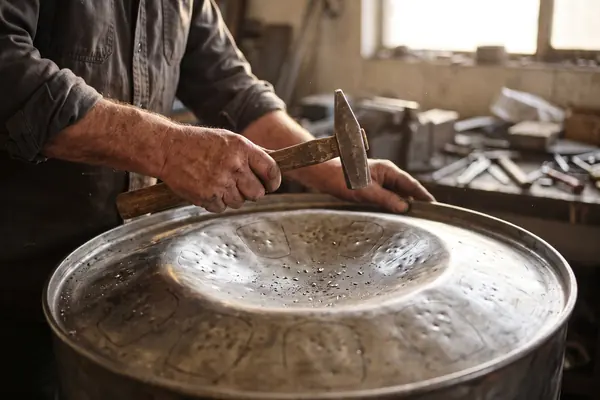
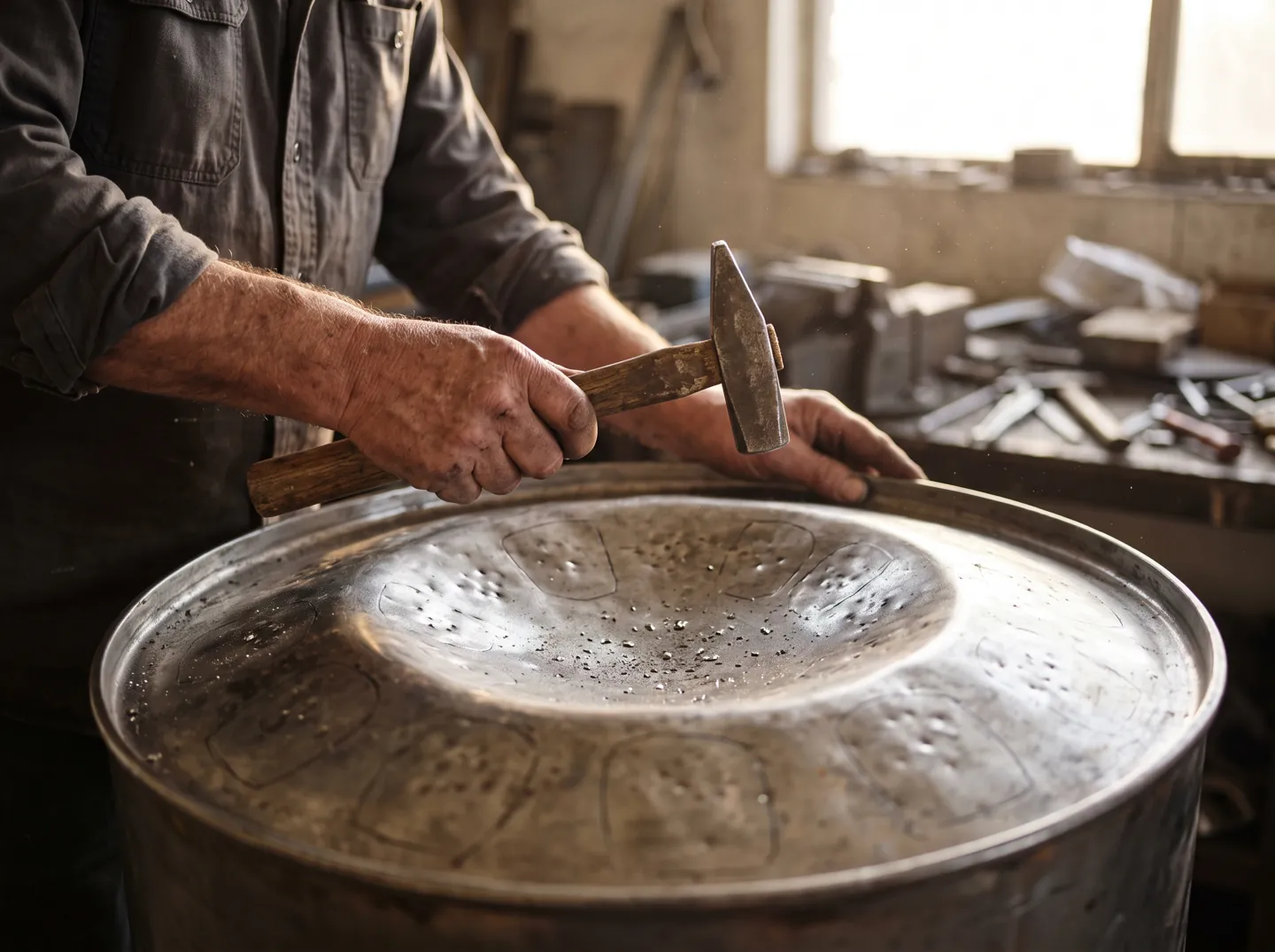
The tuner sinks the top with a hammer, grooves the note layout, tempers the drum over a fire, then fine-tunes each note. Players had found raised parts sound different to flat ones.
How it is playedTHE BAND
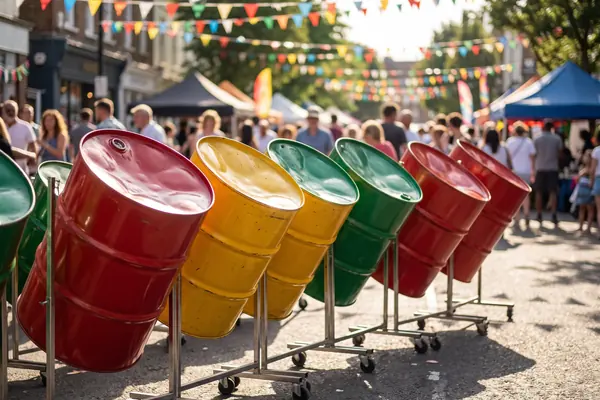
An instrument uses one to nine drums. A tenor is one drum; a bass uses six to nine, with the sides left full length. Ranges mimic a string orchestra.
See the numbers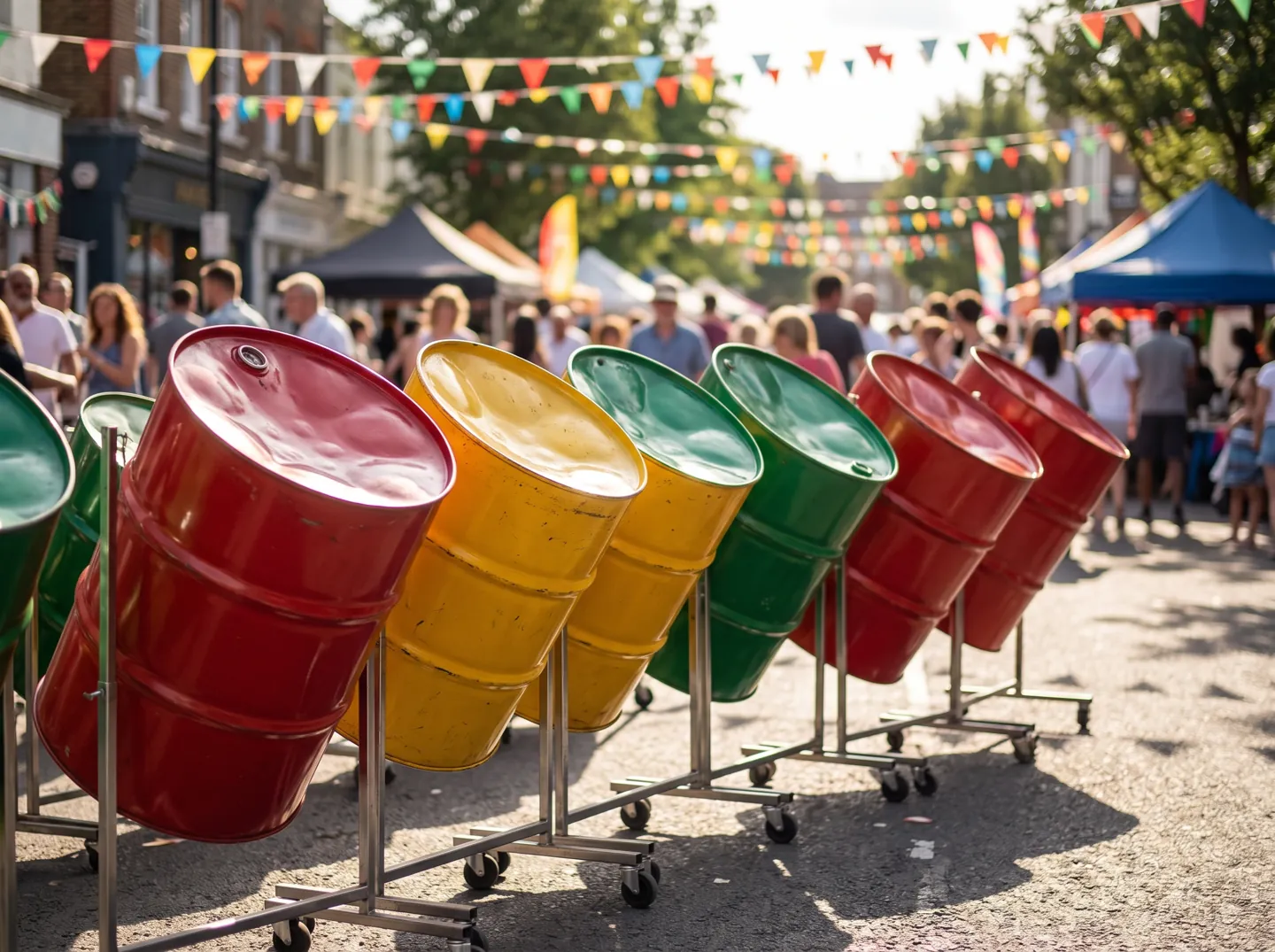
PLAYING A PAN
Wesleyan's instrument museum and the Horniman Museum describe how pan is played, and how players first made their own sticks.
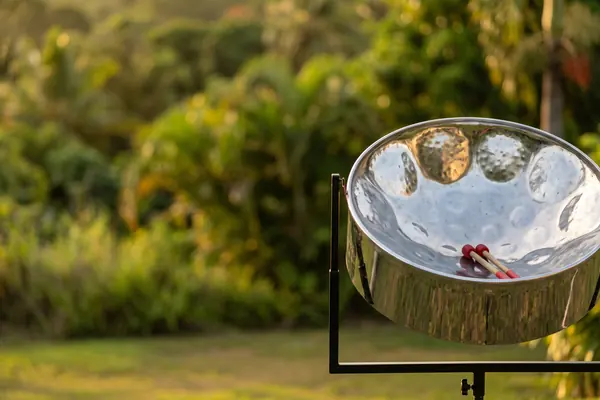
Pans are played with wooden or aluminium mallets wrapped in rubber so the metal can ring. Bass mallets use soft sponge balls.
Strokes must move away quickly so the drum can resonate. Higher, smaller notes need more force for the same volume.
A pan note does not ring for long, so sustained pitches are played as rapid rolls or alternating sticks.
The rhythm section, called the engine room, includes car brake iron, shaker, scraper, congas and drum kit.
PAN IN BRITAIN
The Horniman Museum says steel pans first appeared on British TV in 1950 on the Bal Creole show, thanks to Boscoe Holder and his Caribbean Dancers. That led to the Trinidad All Steel Percussion Orchestra playing the Festival of Britain in 1951.
Pan has remained a popular part of carnival in Britain ever since. The Horniman's own tenor pan, made from an oil drum, was presented to the museum in 1955, and Wesleyan's museum names Nottingham among the most prominent carnival centres of the Caribbean diaspora.
Questions
Yes. Wesleyan University's instrument museum uses both names for the instrument, which is made from one or more steel barrels.
Trinidad, where it grew up in the late 1930s as accompaniment to carnival masquerade bands. It is now the national instrument of Trinidad and Tobago.
They were available. Physicist Thomas Rossing and colleagues write that thousands of empty 55-gallon oil drums were left on Trinidad's beaches after World War II. Many makers now prefer new or custom-made drums.
The top is sunk into a bowl, notes are marked with grooves, the drum is tempered over a fire and each note is then fine-tuned with a hammer.
Rubber lets the steel resonate. Pannist Dougie Dallaway told the Horniman that bare wood sounds hard and can knock a pan out of tune, while rubber gives a less harsh sound.
Sources
ABOUT THIS NAME
doodledrums.com is part of the DoodleSale portfolio. It isn't in an auction right now, but you can ask about leasing it.